
Leave Your Message
In the highly competitive global food and beverage industry, consumer perception is largely dictated by mouthfeel, visual appeal, and consistency. Achieving these attributes seamlessly over a product's shelf life is the primary function of a Compound Stabilizer For Food Texture Stability. Unlike single-ingredient hydrocolloids, compound stabilizers are sophisticated, scientifically engineered blends of emulsifiers, thickeners, and gelling agents. These specialized formulations leverage the synergistic effects between different polysaccharides and proteins to create structural networks that single ingredients simply cannot achieve.
The core mechanism behind a compound stabilizer involves complex rheological manipulation. When introduced into an aqueous or lipid system, these stabilizers control water mobility, prevent phase separation, and inhibit the crystallization of ice or sugar. For instance, in complex matrices like acidic dairy beverages or high-protein plant milks, thermodynamic instability naturally leads to protein denaturation and flocculation. By utilizing a precisely calibrated compound stabilizer, food scientists can create a protective steric hindrance around protein particles, ensuring absolute suspension and a smooth, luxurious texture from the production line to the consumer's palate.
Furthermore, the evolution of food texture stability is deeply intertwined with modern processing technologies. Products today must withstand rigorous thermal treatments—such as UHT (Ultra-High Temperature) pasteurization and retort processing—as well as extreme mechanical shear forces during homogenization. A premium compound stabilizer acts as a structural buffer, preventing the breakdown of the food matrix under these harsh industrial conditions, thereby reducing waste, improving yield, and guaranteeing brand consistency.
The global market for food stabilizers and texturants has witnessed exponential growth over the past decade. Driven by the rapid urbanization of emerging markets, the surge in demand for convenience foods, and the explosive popularity of plant-based alternatives, the reliance on advanced Compound Stabilizer For Food Texture Stability has never been higher. Industry reports indicate that the compound food additives sector is projected to maintain a robust Compound Annual Growth Rate (CAGR), reflecting the critical need for formulation problem-solving in modern food manufacturing.
From an industrial perspective, manufacturers are facing unprecedented challenges. Supply chain volatility, fluctuating raw material costs (such as the global shortage of specific gums like Locust Bean Gum or Guar Gum), and shifting regulatory landscapes demand highly adaptable solutions. Compound stabilizers offer a strategic commercial advantage here: by blending multiple hydrocolloids, manufacturers can reduce dependency on a single volatile commodity, optimize cost-in-use, and achieve superior functionality at lower dosage levels.
A significant trend reshaping the industrial application of compound stabilizers is the "Clean Label" movement. Modern consumers are meticulously scrutinizing ingredient lists, demanding recognizable, natural, and sustainably sourced components. In response, top-tier R&D centers are pioneering the next generation of compound stabilizers. These innovative systems utilize enzymatically modified starches, citrus fibers, and natural seaweed extracts to replace synthetic emulsifiers. This delicate balance—maintaining impeccable food texture stability while adhering to clean label constraints—represents the pinnacle of current food science engineering.
The versatility of a Compound Stabilizer For Food Texture Stability allows it to address highly specific challenges across diverse food and beverage categories. Let us explore the profound impact of these systems in key industrial applications:
The transition from mammalian milk to plant-based milks (oat, almond, soy, pea) presents immense textural challenges. Plant proteins behave fundamentally differently in solution; they are prone to chalkiness, rapid sedimentation, and phase separation, especially when introduced to acidic environments like coffee. Compound stabilizers engineered for plant-based systems utilize a matrix of gellan gum, carrageenan, and specific emulsifiers to mimic the creamy, full-bodied mouthfeel of dairy fat. They create a fluid gel network that suspends insoluble calcium and protein particles indefinitely, ensuring a visually appealing and texturally satisfying beverage.
In products like drinking yogurts and lactic acid bacteria beverages, the low pH environment causes casein proteins to reach their isoelectric point, leading to aggressive coagulation and whey syneresis (water separation). A specialized compound stabilizer acts as a protective colloid. High-methoxyl pectin (HMP) and CMC are frequently synergized to coat the protein micelles, utilizing electrostatic repulsion and steric stabilization to prevent aggregation. This results in a smooth, homogenous liquid that remains stable even under ambient storage conditions.
Texture is the defining characteristic of jellies and puddings. The requirement here is not just stability, but precise control over gel strength, elasticity, chewiness, and flavor release. Compound stabilizers blending konjac flour, carrageenan, and xanthan gum create thermoreversible gels that offer a clean bite and excellent syneresis control. In the industrial manufacturing of these products, these compound systems ensure rapid setting times, allowing for high-speed demolding and increased production line efficiency.
Beyond beverages, compound stabilizers are revolutionary in solid food matrices. In bakery applications, they enhance dough rheology, improve gas retention during proofing, and significantly retard staling by managing moisture migration. In processed meats, they act as superior water binders and fat emulsifiers, improving slicing yield, reducing cooking loss, and providing a succulent texture even in reduced-fat formulations.
Nanchang Tellcan food Science Co., Ltd (hereinafter referred to as Tellcan Food), founded in 2001, is an excellent practitioner of compound food additives and food essence, specializing in the research and development, production and sales of food additives, and the research and development of food technology and food technology. Various types of compound food additives, edible essence and spices produced by Tellcan Food can be used in many fields such as food, beverage and dairy products.
Discover Our InnovationsOur technological supremacy in developing the ultimate Compound Stabilizer For Food Texture Stability is driven by our advanced research facilities. By integrating AI-assisted formulation modeling and high-throughput rheological testing, we drastically reduce product development cycles for our global partners.


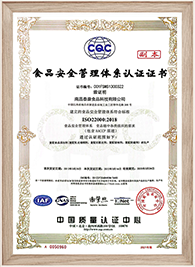
The company has implemented and maintains the HACCP 22000 Food Safety Management System, ensuring reliable products and services. To date, Tellcan has resolved technical challenges for thousands of domestic enterprises and earned prestigious recognitions.
 Council Member of China Food Additives Production & Application Industry Association Standing Council Member of Jiangxi Food Additives Association Member of China Dairy Products Industry Association Member of China Bakery & Confectionery Materials Association Member of China National Federation of Industry & Commerce Bakery Association Premium Products & Global Sourcing Certification



Our compound stabilizers have been successfully integrated into the production lines of leading global food and beverage brands, proving their efficacy in massive industrial scale-ups.


